
Why finishing quality matters so much
Sharper recesses and corners
Accurate boarding and beads keep openings clean instead of soft and untidy.
A smoother wall to decorate
Joint reinforcement and plastering help the built-in wall read as one surface.
Better-looking results for longer
The right drying and paint sequence supports a more stable final finish.
The clean look depends on the preparation
A built-in media wall only reads as part of the room when the surfaces are finished properly. Boarding, corner beads, joint reinforcement and plastering are what create the crisp lines and continuous faces people expect, especially around television recesses, fire openings, shelves and external corners. That means the preparation has to be accurate before any plaster goes on. Openings still need to hold their dimensions, edges need to stay straight and installed components need protecting during the work. A project completed through Deluxe Media Walls & Design Ltd treats the finishing stage as part of the build, not as a quick tidy-up at the end.
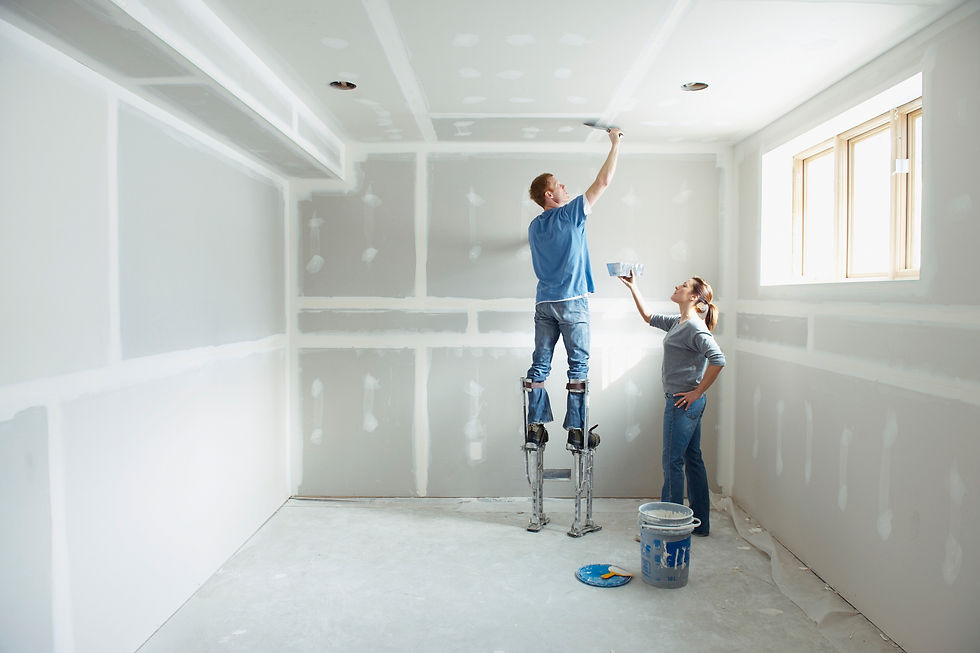

Drying, decorating and getting the last details right
Good finishing also means patience in the right places. New plaster needs time to dry before the appropriate paint system is applied, otherwise the final decoration can be spoiled before the wall has properly settled. We also take care around electrical fittings, vents and any installed features so the completed wall stays clean and well defined. The reason this matters is simple: uneven edges, visible joints and poorly shaped openings are the first things your eye lands on, no matter how nice the fire or television is. With Deluxe Media Walls & Design Ltd, the last stage is there to sharpen the whole design, not let it down.
Frequently asked questions
When does plastering happen during a media wall build?
It comes after the structure and core positions are established, but before final decoration. By that stage, recesses, corners and openings should already be accurately formed so the plastering can sharpen the wall rather than hide problems that ought to have been fixed earlier.
How long should new plaster dry before painting?
Drying time depends on conditions on site, so it is important not to rush it. Allowing new plaster to dry properly before the appropriate paint system goes on helps avoid patchy decoration and gives the finished media wall a cleaner, more durable look.
Why does the finishing stage make such a difference?
Because the eye notices uneven edges, visible joints and poorly defined recesses straight away. A media wall can have good design and good products, but if the plastering and finishing are careless, the whole installation loses the built-in look people wanted in the first place.